
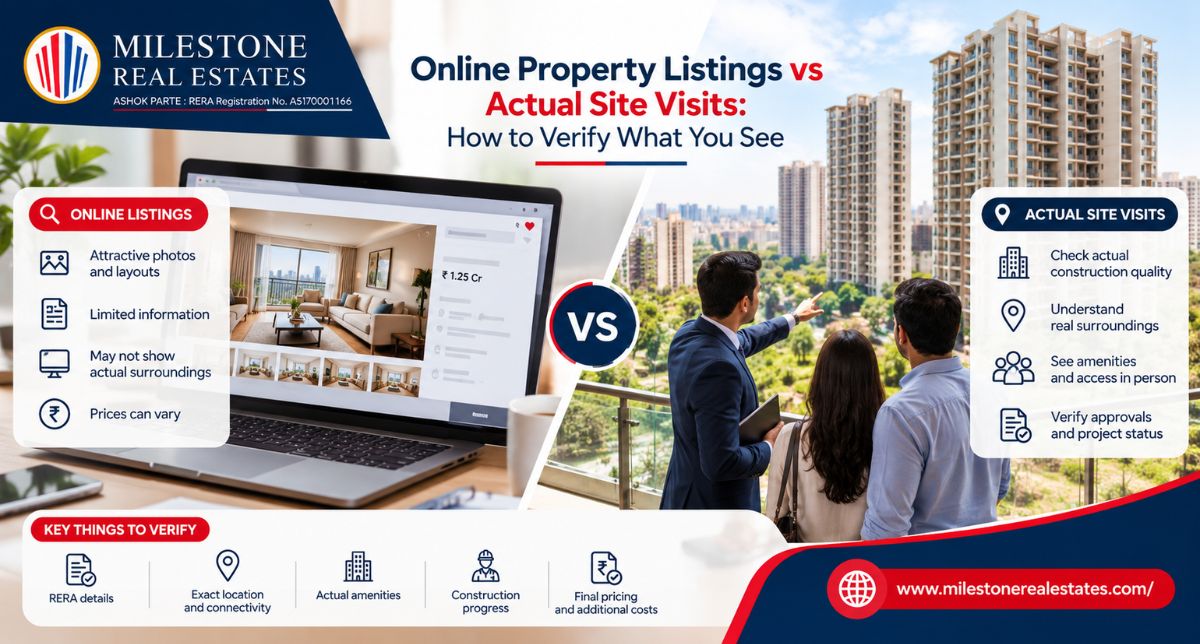
Buying a property often begins with an online search. Property portals, real estate websites and social media advertisements allow buyers to explore apartments, compare prices and shortlist projects without travelling to multiple locations. However, photographs and descriptions do not always show the complete picture.
Comparing Online Property Listings with an actual property visit helps buyers understand what they are purchasing and avoid unexpected surprises. Before paying a booking amount, it is important to verify the property's condition, location, price and documentation.
1. Check Whether the Photos Match the Property
Property advertisements often use professional photography to present homes attractively. Wide-angle images, careful lighting and digital enhancements can make rooms appear larger or brighter than they are.
During a Property Site Visit, compare the actual apartment with the photographs you viewed online. Check the room sizes, ventilation, natural light, balcony, windows and overall condition.
For under-construction projects, ask whether the images show a sample flat, a completed apartment or a proposed design. A sample flat may include furniture and interior work that are not included in the purchase price.
Always clarify what will be delivered with the property and request written confirmation of important commitments.
2. Verify the Advertised Price
An attractive online price may not represent the complete cost of purchasing a home. Some advertisements highlight a starting price or exclude additional expenses.
Ask the seller or developer for a detailed cost sheet. Check the agreement value, applicable taxes, stamp duty, registration charges, parking costs and maintenance deposits.
When comparing Online Property Listings, make sure you are evaluating properties with similar carpet areas, configurations and possession status. A lower advertised price may not necessarily mean better value.
Avoid making financial decisions based only on promotional offers. Confirm the offer's validity, conditions and payment schedule before proceeding.
3. Confirm the Carpet Area
Property size is another detail buyers should examine carefully. Advertisements may highlight different measurements, including carpet area, built-up area or super built-up area.
Ask which measurement is being advertised and verify the carpet area against the relevant project documents and agreement.
During your visit, assess whether the available space suits your household. Consider bedroom sizes, kitchen layout, storage, passage areas and furniture placement.
A property may look spacious in photographs but feel different when you visit it. Checking the layout personally helps you decide whether the home meets your practical needs.
4. Inspect the Location and Connectivity
A listing may describe a property as close to a railway station, metro station, school or major road. However, advertised distances do not always reflect the convenience of the actual journey.
Visit the location and check the route, road conditions, traffic, public transport availability and access to essential services.
If possible, visit during peak commuting hours. This can help you understand travel times and identify issues that may not be obvious during a short visit.
These Property Buying Tips are particularly useful when comparing homes in unfamiliar neighbourhoods or developing locations.
5. Check Amenities and Building Conditions
Swimming pools, gyms, landscaped gardens and clubhouses can make a residential project attractive. However, buyers should confirm which amenities are available and which are still planned.
Inspect common areas, lifts, parking facilities, security arrangements, water supply and building maintenance. For completed properties, look for signs of dampness, leakage, damaged fittings and poor ventilation.
For under-construction projects, check the construction progress and clarify the expected possession date. Ask which facilities are included in the agreement instead of relying only on sales presentations.
6. Verify Documents Before Booking
Property verification should include legal and regulatory checks. For applicable projects, review the project's registration and details through the official MahaRERA website.
Check the ownership records, approved plans, agreement terms and other documents relevant to the transaction. For resale properties, examine the seller's ownership documents and any outstanding dues.
Professional legal advice can help identify issues that may not be obvious to a buyer. Never assume that an attractive advertisement guarantees that a property is legally compliant.
Thorough Property Verification reduces the risk of making decisions based on incomplete or misleading information.
7. Make an Informed Investment Decision
Whether you are buying a home for personal use or planning a Real Estate Investment, compare the advertised details with what you discover during your visit.
Ask questions, keep written records of important promises and avoid rushing into a booking because of sales pressure. Revisit the property if necessary before making a final decision.
Conclusion
Online Property Listings make property searches easier, but they should be the starting point rather than the final basis for a purchase. An actual visit helps buyers assess the space, location, amenities and overall condition.
Verify the price, carpet area, legal documents and important promises before committing your money. Careful checks today can help you make a more confident property decision tomorrow.